
As a small business owner, you probably hear advice like “market to your audience” or “know your ideal customer” all the time. But what does that actually mean? More importantly, how do you figure out who your ideal customer is—and why does it matter so much?
Here’s the truth: without a clear understanding of your audience, your marketing is just guesswork. You could be putting time, effort, and money into strategies that are reaching the wrong people. On the other hand, when you know exactly who your ideal customer is, every part of your business becomes more intentional—and more effective.
Why Identifying Your Ideal Customer is a Game-Changer
Defining your ideal customer isn’t just about getting to know your audience—it’s about understanding how your product or service fits into their life. Once you know who you’re speaking to, you can create marketing messages that feel personal, choose the platforms they actually use, and develop offers they can’t resist.
Here are just a few ways knowing your ideal customer impacts your business:
- Better communication: Instead of vague, generic marketing, you can craft messaging that speaks directly to your customer’s needs and emotions.
- Smarter spending: You’ll focus your advertising on the platforms and methods your audience already engages with.
- Stronger loyalty: Customers who feel understood and valued are more likely to stick with your business long-term.
But identifying your ideal customer goes beyond guessing their age or gender. To truly connect with your audience, you need to understand their habits, challenges, and motivations.
The Key Elements of Understanding Your Audience
If you’re ready to create a clear picture of your ideal customer, start by focusing on these essential areas:
1. Who They Are (Demographics)
The first step is to get clear on the basics: age, gender, location, income level, and education. These details provide a foundation for understanding your audience and help narrow your focus.
For example, if your product is high-end, knowing your customer’s income level can help you position your pricing and messaging appropriately.
2. What They Care About (Behavior Insights)
This is where you dive into the deeper stuff. Psychographics focus on your audience’s values, interests, and challenges. What do they believe in? What motivates them? What do they struggle with?
Understanding these emotional drivers helps you connect with your audience on a more personal level. If your ideal customer values sustainability, for instance, highlighting eco-friendly features of your product can be a game-changer.
3. How They Shop (Buying Habits)
How does your audience find and purchase products? Do they rely on word-of-mouth recommendations, online reviews, or social media ads? Understanding their buying habits can help you meet them where they are and remove barriers to purchasing.
For example, if your audience shops primarily online, a user-friendly website with great product reviews is essential.
4. How Your Business Fits into Their Life
Once you’ve gathered information about who your customer is and how they shop, it’s time to put the pieces together. Think about how your product or service solves their problems or enhances their life.
For instance, if you’re a pest control business, your ideal customer might be a busy homeowner looking for a quick and reliable solution to keep their family safe from insects. Knowing this helps you craft messaging that emphasizes convenience and peace of mind.
How to Get Started
If this sounds overwhelming, don’t worry – you don’t have to figure it all out at once. Here are some tips to start gathering the information you need:
- Analyze your current customers: Look for patterns among the people who already buy from you.
- Use analytics tools: Platforms like Google Analytics and Facebook Insights can provide data on who’s engaging with your business online.
- Ask your audience: Surveys, interviews, and feedback forms are great ways to learn more about your customers’ needs and preferences.
- Study your competition: Pay attention to the type of audience your competitors are targeting and how they’re reaching them.
Taking the time to define your ideal customer isn’t just about improving your marketing – it’s about building a business that truly serves the people it’s meant for. When you understand who your audience is and what they need, everything becomes easier, from creating products to crafting offers to designing ads.
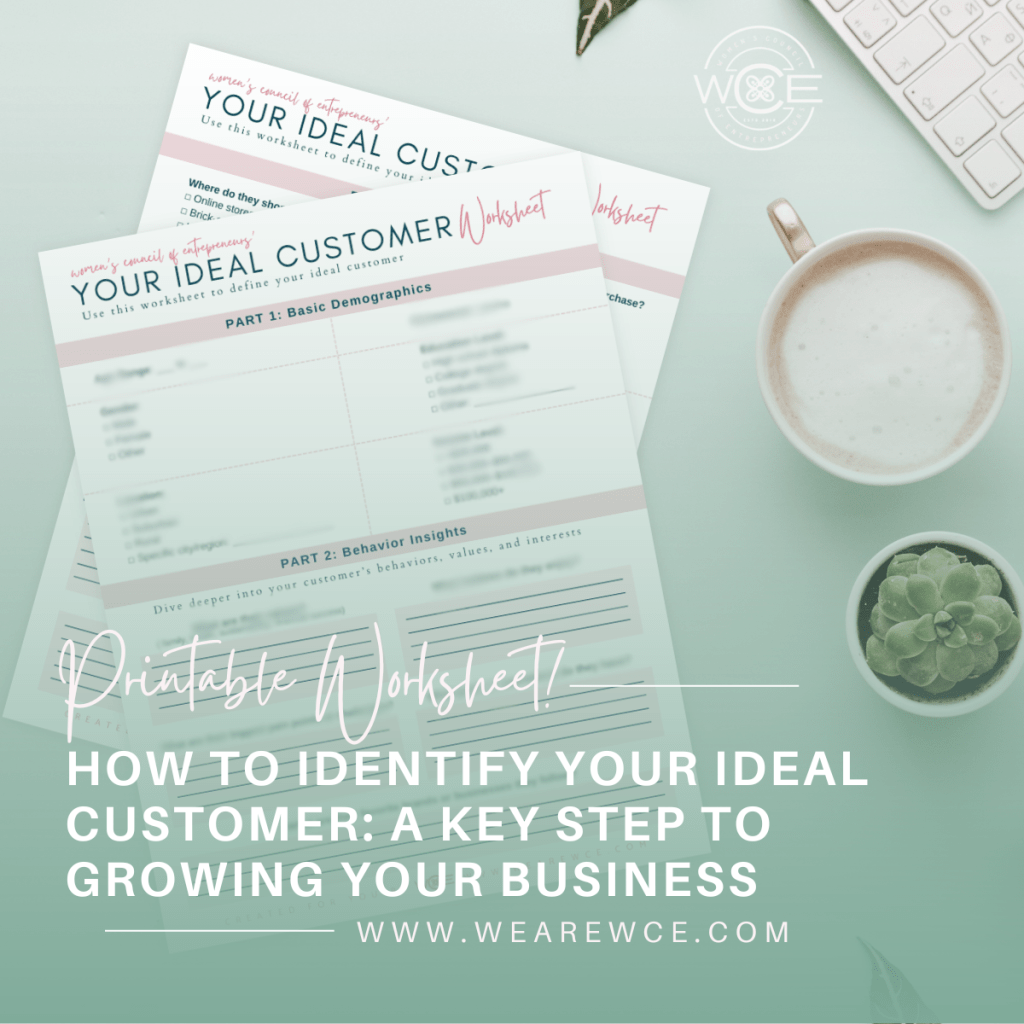
If you’re ready to stop guessing and start connecting with your audience, our Ideal Customer Worksheet is the perfect place to start. This simple tool will help you break down the key traits, values, and habits of your ideal customer so you can get clear on who they are and how to reach them. It’s designed to help you create a detailed picture of your ideal customer so you can focus your efforts and grow your business with confidence.
Stop marketing to everyone. Start speaking directly to the people who need you most!
Get the worksheet here and start building a clearer, more effective path to success.
For more tips and downloads please browse through our other Articles.
You can also become a member of WCE and get access to all of our downloads and resources instantly, as well as, free networking & mastermind events, and discounts on workshops. You can learn more by clicking the button below:
If you’re curious about Women’s Council of Entrepreneurs’ upcoming virtual workshops or our in-person mastermind & networking events – You can find more information here:
And if you haven’t subscribed to our blog & weekly email newsletter yet make sure to do so now so you don’t miss any of our upcoming articles and resources!

 WCE Small Business Resources