

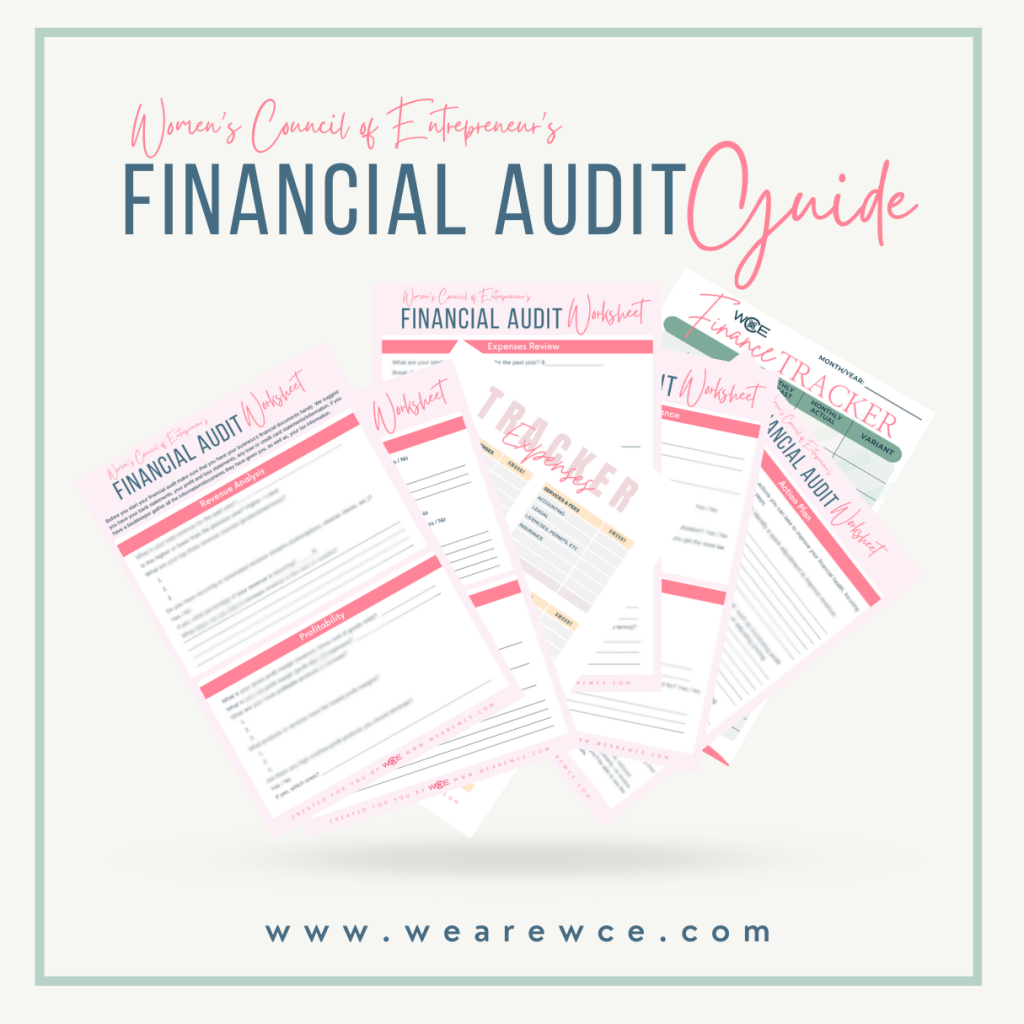
Knowing your finances is like having a map of your business’s journey. It’s not only essential, it is also extremely empowering. It helps you understand where you are, and it sets you on the right path to where you want to be. Sound overwhelming? Don’t worry, we’ve got your back! Since we know that not everyone knows how to execute a financial audit on their business, Women’s Council of Entrepreneurs has created a Financial Audit Guide to help you organize and understand the current financial health of your business and how to create a plan for a stronger financial future. So, are you ready to take the first step? Let’s explore the benefits of understanding your finances, as well as, the key parts of our Financial Audit Guide.
Why Knowing Your Finances Matters
Being well-informed about your business’s financial health is a powerful asset that enables you to make smarter, data-driven decisions that drive growth and stability. When you clearly understand where your revenue is coming from, which products or services yield the highest profits, and where expenses can be trimmed, you build a foundation for strategic planning. This insight allows you to set realistic, achievable goals rather than basing them on guesswork, which can lead to overextending resources or missing potential opportunities.
With detailed knowledge of your finances, you can make decisions grounded in reality, such as deciding when to invest in growth or when to focus on stabilizing cash flow. Knowing the profitability of each product or service helps you identify areas where you could expand or adjust pricing. For example, if one service is highly profitable, it may be worth increasing marketing efforts for it, while low-profit items may need to be reconsidered or adjusted to reduce costs. This strategic approach maximizes profitability and helps allocate resources to where they will make the greatest impact.
Track your finances will also help you catch errors or unnecessary expenses that might otherwise go unnoticed. For instance, you may spot subscriptions or services your business is no longer using, yet you’re still paying for. Reviewing expenses helps you identify these “leaks” and plug them, ultimately improving your bottom line. Additionally, being attentive to your financials can uncover errors in billing, such as double charges or unexpected rate increases, that could cost you significantly over time.
As we mentioned above, financial clarity also prepares you for both opportunities and challenges. When you’re well-informed, you can move quickly to take advantage of growth opportunities, such as investing in new equipment, expanding your team, or increasing inventory during a peak season. At the same time, if you spot potential issues—such as lower-than-expected cash flow or a dip in profitability—you’re prepared to take corrective actions before they become serious problems. In short, knowing your finances inside and out not only reduces financial stress but also empowers you to lead your business with confidence, clarity, and resilience.
Understanding why financial clarity is essential is great, but knowing HOW to analyze your finances is what we need to know. This is where WCE’s Financial Audit Worksheet comes in – below you will find a summary of each part of our worksheet.
Key Sections of the Financial Audit Worksheet
Revenue Analysis
This is where you will an understanding of the sources of your revenue, compare your performance to the previous year, and identify opportunities to increase earnings. Knowing which products or services bring in the most revenue (and whether you have recurring income) can help you strategize for stability and growth.
Profitability:
Profitability analysis goes beyond revenue and dives into margins—both gross and net. By assessing your most profitable products or services, as well as those with low returns, you can make informed decisions about where to focus your efforts or consider eliminating high-cost, low-margin offerings.
Your Expenses Tracker
This is exactly as it sounds – you go through your documents and find what you spend on items, such as, employee costs, marketing, operational expenses, etc. This section will give you an overview of what your biggest expenses truly are.
Expenses Review
In this section, you’ll analyze the information on from your expense tracker and identify potential areas for cost reduction. Regularly reviewing your expenses is crucial for maintaining profitability and identifying unnecessary spending.
Cash Flow
Cash flow management is essential for meeting your business needs and covering unexpected expenses. This section encourages you to examine your cash reserves and strategies for managing cash flow, ensuring you have the resources to operate smoothly.
Debt Management
If your business carries debt, assessing it is key to maintaining financial health. In this section, you’ll list outstanding debts, assess your ability to manage payments, and consider opportunities for refinancing to reduce interest costs.
Profit & Loss Trends
Analyzing trends in your profit and loss statements helps you spot seasonal patterns, identify your most profitable months, and recognize times when your expenses may increase. This awareness allows you to prepare ahead and maintain steady profitability throughout the year.
Taxes and Compliance
Staying on top of your tax obligations is essential to avoid fines and penalties. In this section, review your tax filings, set aside funds, and identify potential savings with the help of a tax professional if needed.
Financial Forecasting
This section of the worksheet will help you set goals for the future of your small business, as well as, how you will track these goals. As you go through each section of the worksheet, note specific areas for improvement or opportunity. For example, you might decide to increase recurring revenue streams, reduce unnecessary expenses, or set a debt reduction plan.
Action Plan
A financial audit is only effective when you turn insights into actions. After completing the audit and setting your goals, you will use the action plan to categorize your goals into three specific steps—immediate, short-term, and long-term—that will help you work toward a stronger financial position. Regularly review your progress to stay accountable and adjust as needed.
Bonus Finance Tracker
This portion of the worksheet you can use monthly moving forward to track your finances and make sure you are staying on track!
As you can see, WCE’s Financial Audit Guide is designed to transform your financial knowledge into action, making it easier to gain clarity and control over your business finances. These worksheets take the guesswork out of financial management, helping you identify key opportunities to boost revenue, cut unnecessary expenses, and set realistic, achievable goals. By downloading this tool, you’ll be equipped with a straightforward, actionable approach to strengthen your business’s financial health and prepare for growth with confidence. To get your copy of Women’s Council of Entrepreneurs’ Financial Audit Worksheet you can click the button or image below.
If you found this helpful you can discover more tips, downloads, and articles HERE. You can also become a member of WCE and get access to all of our downloads and resources instantly with free networking & mastermind events! Learn more by clicking the button below:
And please check out WCE’s On-Demand Education – We have topics covering all aspects of running a business. You can find them HERE!
If you are not subscribed to WCE’s newsletter you need to ASAP! Our newsletters are filled with inspiration, resources, and downloads that go straight to your inbox every week!

 WCE Small Business Resources